
Outdoor Spaces Designed for Year-Round Use
Concrete Patios & Outdoor Living in San Jose for homeowners expanding usable space with custom hardscape features and durable entertainment areas
A well-designed patio extends living space beyond interior walls, providing area for outdoor dining, seating, and entertainment that complements your home's architecture and existing landscaping. Curiel Concrete Construction builds custom patios throughout San Jose using finish options that range from smooth troweled surfaces to stamped patterns replicating natural stone textures. Each project accounts for how you'll use the space—whether for large gatherings requiring open layout or intimate settings with integrated seating walls and fire pit surrounds. Proper grading ensures water drains away from the house and doesn't pool on the patio surface during winter rains.
This service includes patio design, site preparation, concrete installation, decorative finishes, and integrated features such as walkway connections and planter borders. Customization options allow you to match colors and textures to your home's exterior materials and landscape design.
Request a consultation to discuss your outdoor living goals and review design options that maximize your available space.
Patio installation begins with layout planning that considers sun exposure, access points from the house, and sight lines to landscaping or views. Excavation removes sod and unstable soil, base rock is compacted to create stable support, and forms are set to elevations that slope water away from structures at a rate of one-quarter inch per foot. Decorative finishes such as stamped patterns or colored concrete are applied during the finishing process, not added later, so they become part of the surface structure.
After completion, you gain outdoor space that remains level without settling, surfaces that shed rainwater efficiently without creating muddy areas around the perimeter, and finishes that resist fading and wear from foot traffic and furniture placement. Integrated walkways connect the patio to other yard features without abrupt transitions, and control joints are placed to manage cracking along planned lines rather than randomly across visible areas.
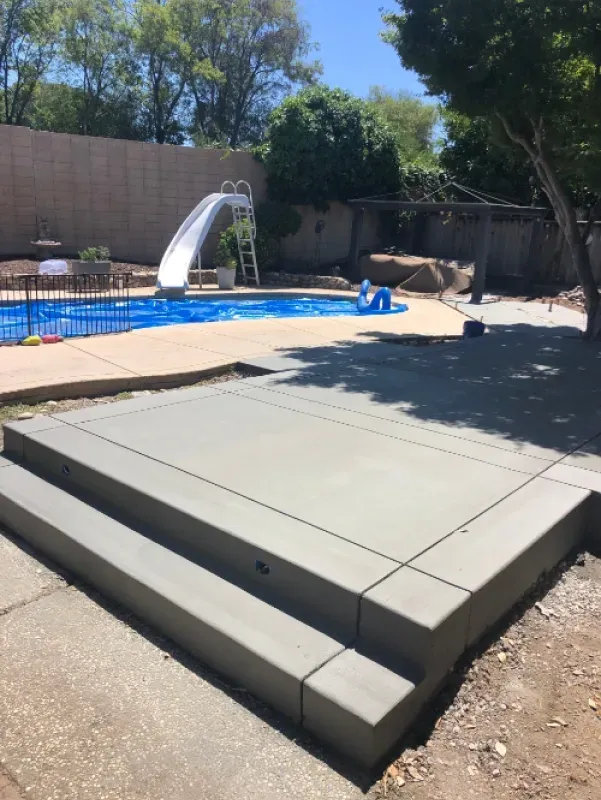
Design options include multi-level patios that follow natural slope without requiring extensive grading, borders that separate the patio from lawn or planting beds, and texture variations that define different functional zones within the space. Seating walls and planter boxes can be built during the same project, creating cohesive outdoor living areas that require minimal ongoing maintenance.
Questions About Custom Patio Projects
Patio projects involve design decisions about size, shape, and finish that affect both appearance and long-term functionality, so understanding your options helps you create outdoor space suited to your needs.
What size patio works best for entertaining?
A standard dining table with six chairs requires at least 120 square feet, while larger gatherings benefit from 200 to 300 square feet that allow separate seating and dining zones. Site constraints such as existing trees, utility lines, or slope may affect layout, and multi-level designs can maximize usable space on sloped properties.
How do decorative finishes hold up to outdoor furniture?
Sealed decorative concrete resists scratching and staining from metal furniture legs and ceramic planters better than many natural stone materials. Furniture pads prevent surface abrasion in high-use areas, and periodic resealing maintains protection against moisture and UV exposure that can dull colors over time.
When should a patio include integrated drainage?
Properties with poor soil drainage, patios located downslope from the house, or areas prone to runoff from adjacent landscaping benefit from drains integrated into the patio design. Trench drains along the patio edge or discrete catch basins prevent water from pooling on the surface or flowing toward the house foundation.
How does patio design complement existing landscaping?
Color selection can match or contrast with nearby hardscape materials like retaining walls or walkways, and borders provide clean transitions between concrete and planting beds. Stamped patterns should scale appropriately—large patios suit bold stone patterns, while smaller spaces work better with finer textures that don't overwhelm the area visually.
What affects patio longevity in San Jose's climate?
Proper base preparation accounts for seasonal soil moisture changes that cause expansion and contraction beneath the slab. Control joints placed at appropriate intervals allow movement without structural cracking, and sealing protects the surface from UV fading during the region's long, sunny summers and moisture intrusion during winter rains.
Curiel Concrete Construction provides design sketches and material samples during the planning phase, helping you visualize how your patio will look and function within your yard's existing layout. Schedule a free consultation to explore custom patio designs that expand your outdoor living space with durable, low-maintenance construction built to last.